
The Meghalaya High Court, officially known as the High Court of Meghalaya, is the highest judicial authority in the state of Meghalaya. Located in Shillong, the court handles civil, criminal, constitutional, administrative, and public interest matters across the state.
The High Court functions under the Constitution of India and plays a major role in protecting constitutional rights, supervising subordinate courts, and maintaining judicial administration throughout Meghalaya. Before the establishment of the Meghalaya High Court, judicial matters of the state were handled by the Gauhati High Court.
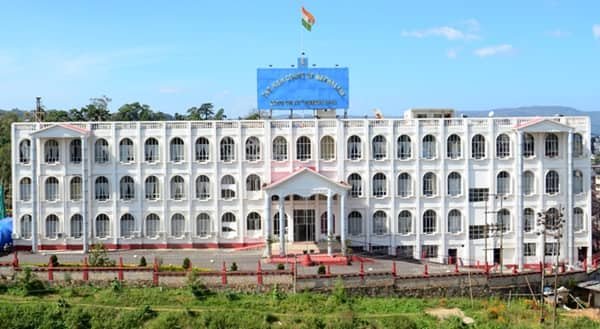
The High Court of Meghalaya officially came into existence on 23 March 2013 under the North Eastern Areas (Reorganisation) and Other Related Laws Amendment Act, 2012.
Quick Overview of Meghalaya High Court
| Particulars | Details |
| Established | 23 March 2013 |
| Location | Shillong, Meghalaya |
| Jurisdiction | State of Meghalaya |
| Type | High Court |
| Main Functions | Civil, Criminal, Constitutional Cases |
| Official Language | English |
| Principal Seat | Shillong |
| Parent Historical Court | Gauhati High Court |
| Official Website | meghalayahighcourt.nic.in |
History of Meghalaya High Court
The judicial history of Meghalaya was originally connected with the Gauhati High Court.
According to official judicial records, a Permanent Bench of the Gauhati High Court at Shillong was established in 1995 under the Gauhati High Court (Establishment of Permanent Bench at Shillong) Order, 1995. The bench was inaugurated by former Chief Justice of India Justice A. M. Ahmadi.
Before this, judicial matters from Meghalaya were handled directly under the Gauhati High Court system after the formation of Meghalaya state in 1972.
Later, the Government of India passed the North Eastern Areas (Reorganisation) and Other Related Laws Amendment Act, 2012 for establishing separate High Courts for Meghalaya, Manipur, and Tripura.
The High Court of Meghalaya officially started functioning from 23 March 2013 and was inaugurated on 25 March 2013 by former Chief Justice of India Justice Altamas Kabir at Shillong.
The establishment of a separate High Court significantly improved judicial accessibility and constitutional administration within Meghalaya.
Over the years, the court has delivered important judgments related to:
- Tribal rights
- Constitutional governance
- Environmental protection
- Administrative law
- Human rights
- Electoral matters
- Public Interest Litigations
Recently, the Meghalaya High Court passed important rulings related to electoral eligibility in autonomous district council elections.
Jurisdiction of Meghalaya High Court
The High Court exercises jurisdiction throughout the state of Meghalaya.
Original Jurisdiction
Certain matters can be filed directly before the High Court including:
- Writ petitions
- Public Interest Litigations (PILs)
- Constitutional disputes
- Election petitions
- Service matters
Appellate Jurisdiction
The court hears appeals from subordinate courts functioning across Meghalaya.
These include:
- Civil appeals
- Criminal appeals
- Sessions court matters
- Family court appeals
- Tribunal matters
Writ Jurisdiction
Under Article 226 of the Constitution of India, the High Court can issue writs for protection of legal and fundamental rights.
Citizens approach the court against:
- Illegal government actions
- Administrative irregularities
- Constitutional violations
- Public authority decisions
Supervisory Jurisdiction
The High Court supervises subordinate courts and District Council Courts functioning throughout Meghalaya.
Structure of Meghalaya High Court
The High Court functions under the leadership of the Chief Justice along with permanent and additional judges appointed by the President of India.
According to judicial information, the sanctioned strength of the court is four judges including the Chief Justice.
Types of Cases Handled
The court handles:
- Civil disputes
- Criminal matters
- Constitutional cases
- Tribal law matters
- Administrative disputes
- Service matters
- Public Interest Litigations
Administrative Structure
The High Court administration manages:
- Case filing
- Judicial records
- Registry operations
- Cause lists
- Digital services
- Court administration
Official judicial records also provide detailed information about judges and registry administration.
Digital Facilities at Meghalaya High Court
The Meghalaya High Court provides several modern judicial services including:
- Online case status
- E-filing systems
- Digital cause lists
- Virtual hearings
- Online judgments and orders
- Video conferencing facilities
- Digital law reports
The official judicial portal also provides access to Digital Law Reports and online order databases.
Court Building and Infrastructure
The Meghalaya High Court functions from Shillong, the capital city of Meghalaya.
The court complex includes:
- Modern courtrooms
- Judges’ chambers
- Registry offices
- Lawyer halls
- Libraries
- Administrative sections
- Digital filing systems
- Video conferencing facilities
Official judicial records also mention both old and new High Court buildings associated with the Meghalaya High Court infrastructure.
The court remains one of the most important judicial institutions in northeastern India.
Subordinate Courts Under Meghalaya High Court
Several district and subordinate courts function under the supervision of the Meghalaya High Court.
Major judicial districts include:
- Shillong
- Tura
- Jowai
- Nongstoin
- Williamnagar
The High Court also supervises District Council Courts functioning under the Sixth Schedule areas of Meghalaya.
Importance of Meghalaya High Court
The Meghalaya High Court plays a major role in maintaining constitutional governance and judicial administration in Meghalaya.
The court regularly handles important matters related to:
- Tribal autonomy
- Constitutional governance
- Human rights
- Environmental protection
- Public administration
- Electoral disputes
- Administrative transparency
The High Court has also handled important matters involving Autonomous District Councils and constitutional procedures.
Because Meghalaya has a unique tribal governance structure under the Sixth Schedule of the Constitution, the High Court remains highly important for balancing constitutional law and traditional autonomous administration.
Address of Meghalaya High Court
Official Address
High Court of Meghalaya
MG Road
Shillong, Meghalaya – 793001
Contact Number
0364-2226675
FAQs
Q. When was the Meghalaya High Court established?
The Meghalaya High Court was established on 23 March 2013.
Q. Where is the Meghalaya High Court located?
The court is located at Shillong, Meghalaya.
Q. Which court handled Meghalaya matters before 2013?
Before 2013, Meghalaya fell under the jurisdiction of the Gauhati High Court.
Q. Does the Meghalaya High Court supervise District Council Courts?
Yes, the High Court supervises District Council Courts functioning under Meghalaya’s autonomous district councils.
Q. What types of cases are handled by the court?
The court handles civil, criminal, constitutional, tribal, administrative, and public interest litigation matters.
Q. Does the Meghalaya High Court provide online services?
Yes, the court provides e-filing, online case status, digital law reports, virtual hearings, and e-courts services.