
The High Court Nagpur, officially known as the Nagpur Bench of the Bombay High Court, is one of the most important High Court benches in India. Located in Nagpur, Maharashtra, the bench handles civil, criminal, constitutional, administrative, and public interest matters arising mainly from the Vidarbha region of Maharashtra.
The bench functions under the Bombay High Court and plays a major role in providing judicial access to eastern Maharashtra. Because Nagpur historically served as the capital of the old Central Provinces and Berar, the city developed an important judicial legacy long before the creation of Maharashtra state.
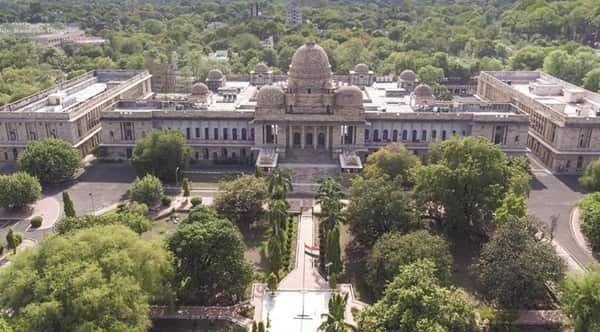
Today, the Nagpur Bench remains one of the busiest and most influential judicial institutions in central India.
Quick Overview of High Court Nagpur
| Particulars | Details |
| Established as High Court | 9 January 1936 |
| Became Bombay High Court Bench | 1 November 1956 |
| Location | Nagpur, Maharashtra |
| Parent Court | Bombay High Court |
| Type | Permanent High Court Bench |
| Main Functions | Civil, Criminal, Constitutional Cases |
| Official Language | English |
| Jurisdiction | Vidarbha Region of Maharashtra |
| Official Website | bombayhighcourt.nic.in |
History of High Court Nagpur
The judicial history of Nagpur goes back to British India. A full-fledged High Court was established at Nagpur on 9 January 1936 for the Central Provinces and Berar under the Government of India Act, 1915. Sir Gilbert Stone became the first Chief Justice of the Nagpur High Court.
The foundation stone of the present High Court building was laid on 9 January 1937 by Sir Hyde Gowan. The building was designed by architect H. A. N. Medd and became known for its grand colonial architectural style.
After the reorganization of states in 1956, the Nagpur High Court was merged into the Bombay High Court system, and the Nagpur Bench officially started functioning as a bench of the Bombay High Court from 1 November 1956.
Later, after the formation of Maharashtra state in 1960, the Nagpur Bench continued to function as an important permanent bench of the Bombay High Court. The Bombay Reorganisation Act also provided statutory recognition for the permanent bench at Nagpur.
Over the decades, the Nagpur Bench has delivered important judgments related to:
- Constitutional rights
- Environmental protection
- Criminal justice
- Administrative law
- Public governance
- Human rights
- Public Interest Litigations
Jurisdiction of High Court Nagpur
The Nagpur Bench exercises territorial jurisdiction over several districts of the Vidarbha region.
According to official Bombay High Court jurisdiction records, the Nagpur Bench handles matters arising from:
- Nagpur
- Akola
- Amravati
- Bhandara
- Buldhana
- Chandrapur
- Gadchiroli
- Gondia
- Wardha
- Washim
- Yavatmal
Original Jurisdiction
Certain matters can be filed directly before the bench including:
- Writ petitions
- Public Interest Litigations (PILs)
- Constitutional disputes
- Service matters
- Election petitions
Appellate Jurisdiction
The bench hears appeals from subordinate courts within its territorial jurisdiction.
These include:
- Civil appeals
- Criminal appeals
- Sessions court matters
- Family court appeals
- Tribunal matters
Writ Jurisdiction
Under Article 226 of the Constitution of India, the bench can issue writs for enforcement of legal and fundamental rights.
Citizens approach the court against:
- Illegal government actions
- Administrative irregularities
- Constitutional violations
- Public authority decisions
Structure of High Court Nagpur
The Nagpur Bench functions under the administrative control of the Bombay High Court.
Court Divisions
The bench includes:
- Division Benches
- Single Judge Benches
- Criminal Benches
- Civil Benches
- Service Benches
- PIL Benches
Several judges of the Bombay High Court are assigned to sit at Nagpur.
Administrative Structure
The administration manages:
- Case filing
- Judicial records
- Registry operations
- Cause lists
- Digital services
- Court administration
Registry officers and judicial staff help maintain judicial functioning throughout the bench.
Digital Facilities at High Court Nagpur
The Nagpur Bench provides several modern judicial services including:
- Online case status
- E-filing facilities
- Digital cause lists
- Virtual hearings
- Online judgments and orders
- Video conferencing facilities
- E-courts services
The official judicial portal also provides unified search systems, live streaming, e-library access, and virtual hearing facilities.
Court Building and Infrastructure
The High Court building at Nagpur is considered one of the historic judicial buildings in India.
The court complex includes:
- Modern courtrooms
- Judges’ chambers
- Registry offices
- Lawyer halls
- Libraries
- Administrative sections
- Digital filing systems
- Video conferencing facilities
The colonial-era architecture and large central courtyard remain important features of the building.
Importance of High Court Nagpur
The Nagpur Bench plays a major role in the judicial administration of the Vidarbha region.
The bench regularly handles important matters related to:
- Criminal justice
- Environmental protection
- Public administration
- Constitutional governance
- Human rights
- Urban governance
- Public accountability
Recent matters before the bench have included illegal hoardings, river encroachments, environmental protection, stray dog management, and public infrastructure accountability.
The bench also regularly conducts Lok Adalats and alternative dispute resolution proceedings for faster settlement of disputes.
Because Nagpur serves as the sub-capital of Maharashtra and the centre of Vidarbha region, the bench remains highly important for governance and judicial administration in eastern Maharashtra.
Address of High Court Nagpur
Official Address
Nagpur Bench
High Court of Judicature at Bombay
Civil Lines
Nagpur, Maharashtra – 440001
FAQs
Q. When was the High Court at Nagpur originally established?
A full-fledged High Court was established at Nagpur on 9 January 1936.
Q. When did the Nagpur Bench become part of the Bombay High Court?
The Nagpur Bench became part of the Bombay High Court from 1 November 1956.
Q. Which districts come under the Nagpur Bench jurisdiction?
The bench mainly handles cases from Vidarbha region districts including Nagpur, Amravati, Akola, Chandrapur, Gadchiroli, Gondia, and others.
Q. Which High Court supervises the Nagpur Bench?
The bench functions under the Bombay High Court.
Q. Does the Nagpur Bench provide online services?
Yes, the bench provides e-filing, online case status, virtual hearings, digital cause lists, and e-courts services.
Q. Why is the Nagpur Bench important?
The bench plays a major role in providing judicial access and constitutional governance for the Vidarbha region of Maharashtra.